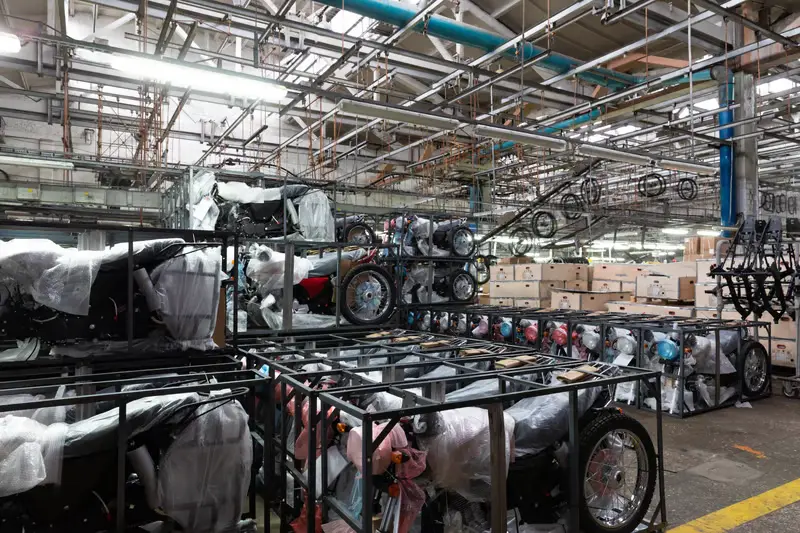
Imagine a factory where workers spend more time searching for tools, moving materials, and waiting for parts than actually producing products. Machines may be running, but the operation is losing time and money at every stage. This is exactly the kind of problem lean manufacturing aims to solve.
The Toyota Production System (TPS) was developed to make production more efficient without sacrificing quality or placing unnecessary pressure on workers. It focuses on eliminating waste, responding to customer demand, and identifying problems before they spread. Its principles now influence manufacturers well beyond the automotive industry.
This guide explains how the system works, including its two main pillars, Just-in-Time production and jidoka. It also examines the seven traditional forms of waste, practical factory examples, and the steps businesses can take to apply these methods successfully.
What Is the Toyota Production System?
The Toyota Production System is a manufacturing philosophy developed by Toyota to produce quality products efficiently while reducing unnecessary activities. Its central objective is to deliver what customers need, when they need it, with the least possible waste.
The system developed through decades of practical experimentation. Engineers and production leaders, including Taiichi Ohno, helped establish its methods during the postwar period. Rather than depending on large production batches and extensive inventory, Toyota worked toward smaller production quantities, better coordination, and continuous improvement.
The Toyota Production System is not simply a collection of factory tools. It connects production planning, quality control, employee involvement, supplier coordination, and daily problem-solving. Its success depends on how these elements work together.
The Two Pillars of the System
The first pillar is Just-in-Time (JIT). It means producing only what is needed, when it is needed, and in the quantity required. This reduces unnecessary inventory and helps materials move through production without long delays.
The second pillar is jidoka, often described as automation with a human touch. Machines or workers identify abnormalities and stop the process when a problem occurs. This prevents defective products from moving to the next stage and gives the team an opportunity to correct the cause.
These pillars support each other. JIT keeps production flowing, while jidoka protects quality. A fast production line is not useful if it repeatedly produces defective parts. Similarly, quality controls cannot deliver efficient production if materials constantly arrive late.
The Seven Types of Waste in Lean Manufacturing
Waste, known as muda in Japanese, refers to activities that consume resources without adding value from the customer’s perspective. The traditional lean framework identifies seven major categories. Recognizing them helps production teams find problems that may otherwise become part of everyday routine.
Overproduction and Waiting
Overproduction happens when a factory makes more products than customers need or produces them earlier than required. It ties up materials, storage space, labor, and working capital. Large batches may appear efficient because machines run continuously, but they can hide defects and create excess stock.
Waiting occurs when workers, machines, or materials remain idle. A workstation may wait for components, machine maintenance, inspection approval, or instructions. Production mapping often reveals that delays between operations consume more time than the actual processing work.
Transportation and Excess Processing
Transportation waste involves unnecessary movement of materials between departments, storage areas, or workstations. Every extra movement adds handling time and creates opportunities for damage. A poorly planned factory layout can make this problem expensive even when individual machines operate efficiently.
Excess processing occurs when a product receives more work than its specifications or customers require. This might include unnecessary inspections, repeated polishing, overly complicated procedures, or additional production steps that do not improve the final product.
Inventory, Motion, and Defects
Excess inventory includes unused raw materials, unfinished products, and finished goods waiting for orders. Inventory can protect production against uncertainty, but too much of it hides problems such as unreliable suppliers, long changeovers, and inconsistent quality.
Motion waste refers to unnecessary movement by workers. Searching for tools, walking between distant stations, or repeatedly reaching for poorly positioned materials reduces productive time. Defects create another form of waste because faulty products require repair, replacement, reinspection, or disposal.
Some modern lean frameworks also recognize an eighth waste: unused employee knowledge and creativity. Ignoring workers’ ideas can prevent a business from identifying practical improvements.
Just-in-Time Production and the Pull System
Just-in-Time production is designed to connect manufacturing activity with actual demand. Instead of producing large quantities based only on forecasts, each process supplies the next process with what it needs. This helps control inventory and makes production problems easier to identify.
The Toyota Production System uses a pull system to support this approach. A downstream process takes the parts it needs, and that withdrawal signals the preceding process to replenish the quantity used. Production is therefore guided by consumption rather than by pushing large batches through the factory.
Kanban and Takt Time
Kanban is a signaling method used to control the movement and replenishment of materials. It may use cards, containers, labels, or digital signals to communicate what part is needed and in what quantity. When a workstation consumes a container of components, the signal triggers replenishment.
Takt time connects production pace with customer demand. It is calculated by dividing available production time by the number of units customers require during that period. For example, if a factory has 420 available production minutes per shift and demand is 210 units, takt time is two minutes per unit.
This does not mean every machine must operate at exactly the same cycle time. Instead, takt time gives planners a reference for balancing work and identifying bottlenecks. The Lean Enterprise Institute identifies pull, takt time, and continuous flow as key operating elements of Just-in-Time production.
Jidoka, Quality Control, and Continuous Improvement
Jidoka means building quality into the production process rather than relying only on final inspection. When a machine detects an abnormal condition, it can stop automatically. A worker can also stop the line when a defect or production problem appears.
This approach prevents faulty products from continuing through the factory. It also makes problems visible while they are easier to investigate. An andon system can alert supervisors when assistance is needed, allowing the team to respond quickly.
Kaizen and Standardized Work
Kaizen means continuous improvement through small, ongoing changes. Workers and supervisors look for practical ways to make tasks safer, easier, and more reliable. Improvements may involve rearranging tools, reducing setup time, simplifying inspections, or changing material delivery routes.
Standardized work provides a consistent method for performing a task. It documents the best known sequence, expected timing, and required work in process. Without a standard, teams cannot easily distinguish between normal variation and a genuine improvement.
The Toyota Production System combines these methods rather than treating them as separate projects. Standardized work creates a stable starting point, while kaizen helps employees improve that standard as they learn more about the process.
Real-World Examples of Lean Manufacturing in Practice
The value of lean methods becomes clearer when viewed through actual production situations. These examples show how the principles work on factory floors and why they require more than simply reducing stock.
Toyota’s Production and Supplier Coordination
Toyota’s vehicle manufacturing operations depend on thousands of components supplied by different production facilities and business partners. A missing component can interrupt vehicle assembly, even when most other parts are available.
To coordinate this flow, Toyota uses Just-in-Time principles and replenishment signals. Downstream processes request the quantities they need, while preceding processes replenish what has been consumed. The system also depends on supplier coordination and minimum necessary stock at production points.
The practical lesson is that inventory reduction requires reliable communication. A factory cannot simply remove stock and expect production to improve. It must establish dependable replenishment, consistent quality, and clear responsibilities across the supply chain.
NUMMI and the Transfer of Toyota Methods
The New United Motor Manufacturing, Inc. (NUMMI) joint venture between Toyota and General Motors in California became an important example of TPS principles being applied outside Japan. The facility began operations in 1984 and demonstrated how Toyota’s production approach could be adapted to a different workforce and manufacturing environment.
NUMMI is particularly relevant because it showed that production performance depends on management practices, employee involvement, standardized processes, and problem-solving culture. Installing new machinery alone would not have created the same operating approach.
For other manufacturers, the lesson is straightforward: lean methods need to fit the people and conditions of the facility. Copying individual tools without building employee participation is unlikely to produce lasting results.
How to Implement the Toyota Production System
A factory should not begin by trying to change every department at once. Start with one production area where delays, defects, excess movement, or inventory problems are clearly visible. Observe the actual work, speak with operators, and map how materials and information move.
Next, establish reliable standards and measure current performance. Useful indicators include production lead time, defect rates, machine downtime, work in process, changeover time, and on-time delivery. These measurements provide a baseline for evaluating improvements.
Introduce practical changes in manageable stages. A business might organize tools using 5S, improve workstation layout, introduce a simple kanban system, or create a process for reporting abnormalities. Train employees to identify problems and involve them in testing solutions.
Managers must also support the changes. If workers are encouraged to report defects but punished when production stops, they will eventually hide problems. A strong improvement culture treats abnormalities as opportunities to understand the process rather than reasons to blame individuals.
Challenges and Common Implementation Mistakes
One common mistake is reducing inventory too quickly. Lower stock levels can expose supplier delays and unreliable processes, but removing too much protection before fixing those weaknesses may cause production stoppages.
Another problem is treating lean manufacturing as a cost-cutting campaign. Reducing headcount, increasing workloads, or pressuring workers to produce faster does not reflect the underlying philosophy. The objective is to remove unnecessary work and make production easier, safer, and more dependable.
Companies also struggle when improvements depend on one manager or consultant. Sustainable results require training, clear standards, employee participation, and regular review. Lean practices must become part of everyday management rather than a short-term factory project.
Summary
The Toyota Production System combines Just-in-Time production and jidoka to improve flow, control quality, and reduce waste. Its methods include kanban, takt time, standardized work, kaizen, and practical problem-solving.
The strongest results come from understanding how work actually happens, involving employees, and improving processes step by step. Manufacturers that focus only on reducing inventory or buying automation miss the larger lesson: reliable production depends on people, process discipline, and continuous improvement.
FAQs
1. What are the main principles of the Toyota Production System?
Its two main pillars are Just-in-Time production and jidoka. These are supported by continuous improvement, standardized work, waste reduction, and employee involvement. Together, they help manufacturers produce according to customer demand while identifying problems early and maintaining consistent product quality.
2. What are the seven wastes in lean manufacturing?
The seven traditional wastes are overproduction, waiting, transportation, excess processing, inventory, unnecessary motion, and defects. Each consumes time, money, or materials without adding customer value. Identifying these activities helps production teams reduce delays, improve workflow, and use resources more effectively.
3. How does Just-in-Time production reduce inventory?
Just-in-Time production replenishes materials according to actual consumption rather than pushing large batches through the factory. Kanban signals communicate what is needed and when. This reduces unnecessary stock, but it requires dependable suppliers, stable processes, accurate planning, and consistent product quality to avoid interruptions.