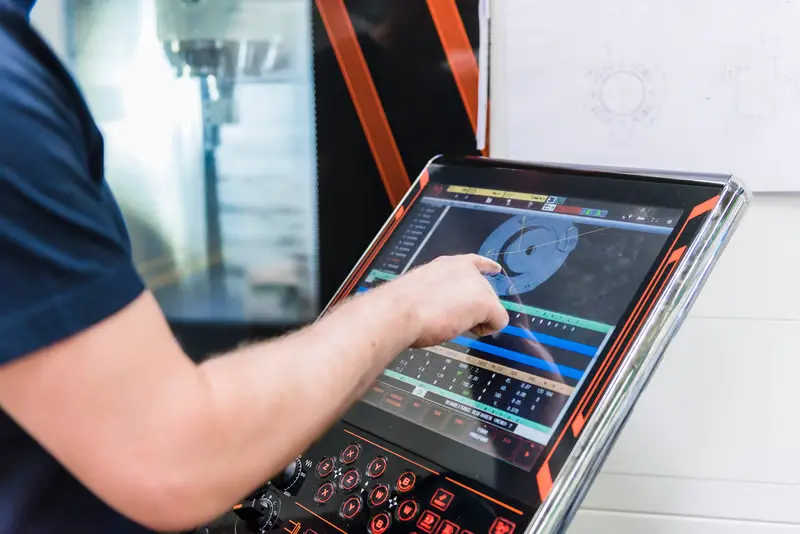
A CNC machine can produce a complex metal component with impressive accuracy, but the result depends on much more than the machine itself. The operator must prepare the design, create the correct program, select suitable tools, secure the workpiece, and control the machining process. Every stage affects the final dimensions and surface quality.
Understanding cnc machine working helps manufacturers make better decisions about production methods, machine settings, and quality control. CNC technology converts digital instructions into controlled movements that remove material or shape a workpiece. It supports repeatable production across industries such as automotive manufacturing, aerospace, medical equipment, and general engineering.
The process may look automatic from the outside, but successful machining requires careful planning and technical knowledge. A small programming error, incorrect tool offset, or poorly secured component can lead to scrap, damaged tools, or machine downtime.
What Is CNC Machine Working?
CNC stands for Computer Numerical Control. It describes a manufacturing method in which a computer-controlled system directs machine movements according to programmed instructions. Instead of relying entirely on manual handwheels and operator movements, the machine follows a defined sequence of commands.
In cnc machine working, the control system interprets programmed coordinates, movement commands, spindle instructions, and other machining data. It then coordinates the machine’s axes, spindle, and auxiliary functions to complete the required operation.
A CNC machine does not automatically understand a drawing or engineering model. The design must first be converted into instructions that the controller can execute. These instructions define where the cutting tool moves, how quickly it travels, and when specific operations take place.
Main Components of a CNC Machine
The machine structure provides the foundation for accurate movement. Its bed, column, table, and other structural parts support the workpiece and machining assemblies. A rigid structure helps reduce vibration and maintain dimensional accuracy during cutting.
The spindle holds and rotates the cutting tool in a milling machine. In a CNC lathe, it commonly rotates the workpiece while the cutting tool moves along programmed axes. Spindle speed must match the material, tool geometry, and cutting conditions.
The control unit acts as the machine’s operating center. It reads the program and sends commands to the drive systems. Motors and feedback devices help position the machine axes accurately.
Other important components include the tool holder, workholding system, coolant arrangement, tool changer, and machine enclosure. Their design varies according to the machine type and intended application.
How CNC Programming Controls the Machine
Programming translates manufacturing requirements into instructions that a CNC controller can understand. It connects the digital design with the physical machining process.
There are several ways to create a CNC program. Simple components may be programmed manually using G-code and M-code. More complex parts are often programmed with computer-aided manufacturing software, commonly called CAM.
Understanding G-Code and M-Code
G-code controls many of the machine’s movement and machining functions. It can define linear movement, circular interpolation, positioning modes, and feed-related instructions. For example, G00 commonly commands rapid positioning, while G01 commands controlled linear movement at a programmed feed rate.
M-code generally controls supporting machine functions. Depending on the controller, these commands can start or stop the spindle, activate coolant, or end a program. Exact command behavior can vary between machine manufacturers and control systems.
A CNC program combines these instructions into an ordered sequence. The controller reads the commands and coordinates the required movements. Correct syntax, suitable coordinates, and safe movement sequences are essential.
Programmers must also consider work offsets, tool length compensation, cutter radius compensation, and machine limits. These settings help the machine interpret programmed positions correctly.
Using CAD and CAM Software
Computer-aided design software creates the digital model of a component. It defines the part’s geometry, dimensions, holes, curves, pockets, and other features. The model becomes the starting point for manufacturing planning.
CAM software uses this design to generate toolpaths. A programmer selects the cutting tools, machining strategy, stock material, and cutting parameters. The software then calculates how the tool should remove material.
The generated toolpath is usually converted into machine-specific code through a postprocessor. This step matters because different CNC controllers may interpret certain commands differently.
Simulation allows programmers to review the proposed operation before production. It can reveal tool collisions, excessive movements, incorrect machining sequences, and other problems. However, simulation does not replace physical setup checks or machine-specific verification.
CNC Machining Operations
CNC machines perform different operations depending on their design, tooling, and number of controlled axes. Each operation has its own cutting requirements and affects the final component in a different way.
CNC Milling
CNC milling uses a rotating cutting tool to remove material from a stationary or moving workpiece. The tool may travel along several axes to create flat surfaces, slots, pockets, contours, and complex shapes.
Three-axis milling is common for many engineering components. Four-axis and five-axis machines provide additional movement options. They can machine multiple sides or complex surfaces with fewer repositioning steps.
The quality of milling depends on tool selection, workholding, spindle speed, feed rate, cutting depth, and machine rigidity. A suitable toolpath also helps control cutting forces and avoid unnecessary tool engagement.
CNC Turning
CNC turning is commonly performed on a lathe. The workpiece rotates while a cutting tool moves along the required axes. This process is suitable for cylindrical components such as shafts, bushings, pins, and threaded parts.
Turning operations can include facing, boring, grooving, threading, and external profiling. Modern CNC turning centers may also include live tooling, allowing certain milling and drilling operations without removing the component from the machine.
Drilling and Other Operations
CNC drilling creates holes at programmed positions and depths. The machine can also perform tapping, reaming, boring, and counterboring when equipped with suitable tools and programs.
Some machines combine milling, turning, and drilling functions. These multi-tasking systems can reduce setup changes and improve production flow. However, they also require careful programming and process planning.
The CNC Machining Process Step by Step
A reliable machining cycle starts before the spindle begins cutting. Each stage prepares the machine for accurate and repeatable production.
Design and Process Planning
The process begins with an engineering drawing or digital model. The programmer reviews dimensions, tolerances, surface finish requirements, and material specifications.
Manufacturing planning determines which machine and operations are appropriate. It also establishes the machining sequence, cutting tools, workholding method, and inspection requirements.
A practical decision at this stage can prevent problems later. For example, a component with several deep pockets may require a tool with sufficient reach and rigidity. Choosing an unsuitable tool can cause vibration or poor surface quality.
Machine Setup and Workholding
The operator prepares the machine by installing the required tools and securing the workpiece. Vises, clamps, fixtures, collets, and chucks are selected according to the part’s shape and machining forces.
Workholding must provide enough support without distorting the component. Thin or delicate parts need particular attention because excessive clamping pressure can change their dimensions.
The operator also establishes the work coordinate system and verifies tool offsets. These settings tell the machine where the component is positioned relative to the programmed coordinates.
Program Verification and Machining
Before production, the operator checks the program, tool list, offsets, spindle direction, and cutting sequence. A dry run or simulation-based verification can help identify potential issues. The first machining cycle should be monitored carefully.
During cutting, the controller coordinates tool movement, spindle rotation, and other programmed functions. The operator observes cutting behavior, listens for unusual noise, and checks for vibration or unexpected tool wear.
This stage demonstrates cnc machine working in practice. The machine follows programmed instructions, but the operator remains responsible for confirming that the process behaves as expected.
Inspection and Finishing
After machining, the component is inspected against the drawing. Measuring tools may include calipers, micrometers, bore gauges, height gauges, and coordinate measuring machines.
If dimensions are outside tolerance, the team investigates the cause before changing offsets or adjusting the program. Random corrections can create further errors.
Some components also require deburring, cleaning, polishing, or additional finishing operations. Final inspection confirms that the part meets its dimensional and surface requirements.
What Determines CNC Machining Precision?
Precision is not produced by programming alone. It depends on the combined performance of the machine, cutting tools, workholding system, material, environment, and inspection process.
Machine Rigidity and Calibration
A rigid machine structure resists deformation under cutting forces. Loose mechanical components, worn guideways, and poor alignment can affect positioning accuracy.
Calibration and preventive maintenance help maintain reliable performance. Manufacturers should check machine geometry, axis positioning, backlash, and other relevant parameters according to equipment requirements.
Thermal changes also matter. Spindle heat, changing room temperatures, and extended machining cycles can cause components to expand. High-precision production may require temperature control and thermal compensation.
Tool Selection and Cutting Parameters
Cutting tools must match the workpiece material and operation. Tool geometry, coating, diameter, flute design, and cutting edge condition all influence performance.
Spindle speed, feed rate, and depth of cut determine how the tool engages with the material. Excessive cutting conditions may cause heat, vibration, rapid wear, or tool failure. Very conservative settings can reduce productivity without necessarily improving quality.
Experienced machinists balance these variables instead of relying on one fixed setting for every job. They consider material hardness, machine power, tool specifications, and the required finish.
Workholding and Material Behavior
A poorly supported workpiece can move during machining. Even slight movement can affect dimensions and surface finish. Correct fixture design is therefore an important part of precision manufacturing.
Material properties also influence the result. Aluminum, steel, stainless steel, titanium, and engineering plastics respond differently to cutting forces and heat. Some materials produce long chips, while others require special tools or coolant strategies.
Understanding these differences makes cnc machine working more predictable and reduces unnecessary trial and error.
Common CNC Machining Problems and Their Solutions
Even a well-planned process can experience problems. Recognizing their causes helps operators respond before defects spread across a production batch.
Tool wear may produce rough surfaces, inaccurate dimensions, and increased cutting forces. Regular tool inspection and suitable replacement intervals help control this issue.
Chatter creates unwanted vibration and visible marks on the component. It may result from weak workholding, excessive tool overhang, unsuitable cutting parameters, or insufficient machine rigidity. Reducing tool overhang and reviewing cutting conditions can improve stability.
Incorrect dimensions may come from wrong offsets, thermal expansion, tool deflection, or programming mistakes. Operators should identify the actual cause before applying corrections.
Poor chip removal can also damage tools and workpiece surfaces. Suitable coolant delivery, chip conveyors, and cutting strategies help maintain a cleaner machining area.
Applications of CNC Machines in Modern Manufacturing
CNC technology supports industries that require accurate components and repeatable production. Automotive manufacturers use CNC machines for engine parts, transmission components, housings, and precision fittings.
Aerospace production relies on controlled machining for structural components, brackets, and complex metal parts. These applications often involve demanding tolerances and strict material requirements.
Medical equipment manufacturers use CNC machining to produce instrument components, device housings, and specialized parts. Material selection and quality documentation are particularly important in this sector.
CNC machines also serve electronics, energy, construction equipment, and general engineering. Their flexibility makes them useful for both prototype development and large production runs.
How to Improve CNC Machine Performance
Better results come from managing the entire process rather than focusing only on cutting speed. Manufacturers should use consistent setup procedures, maintain accurate tool data, and verify programs before production.
Tool condition should be monitored through inspection, tool-life records, and, where available, machine monitoring systems. Preventive maintenance should follow the manufacturer’s recommendations instead of waiting for a breakdown.
Operators also benefit from clear documentation. Recording proven cutting parameters, setup details, inspection results, and corrective actions makes repeat jobs easier to manage.
Another important improvement is reducing unnecessary setup changes. Suitable fixture design, standardized tools, and well-planned machining sequences can reduce production time while maintaining quality.
Automation can further improve consistency. Automatic tool changers, probing systems, pallet changers, and in-process measurement reduce manual intervention. Still, automation works best when the underlying process is stable and properly verified.
Conclusion
CNC machining combines digital programming, mechanical movement, cutting tools, and process control to produce accurate components. Each stage, from design and setup to machining and inspection, contributes to the final result.
Understanding cnc machine working helps manufacturers identify where errors can develop and how to prevent them. Reliable programming, suitable tooling, rigid workholding, regular maintenance, and careful inspection support consistent production.
The best results come from treating CNC machining as a complete manufacturing process. A capable machine is important, but skilled planning and disciplined operation turn its capabilities into dependable parts.
FAQs
1. What is the basic principle of CNC machine working?
A CNC machine follows programmed instructions to control tool movement, spindle functions, and machining operations. It removes or shapes material according to specified dimensions.
2. Which programming language is used in CNC machines?
Most CNC machines use G-code and M-code. These instructions control movements and supporting functions, although command details can vary between controllers.
3. What is the difference between CNC milling and turning?
Milling uses a rotating cutting tool to remove material, while turning generally rotates the workpiece against a cutting tool to create cylindrical features.
4. How accurate are CNC machines?
Accuracy depends on machine condition, calibration, tooling, temperature, and setup. High-precision equipment can achieve very tight tolerances when properly maintained and operated.
5. Why is CNC programming important in manufacturing?
CNC programming defines toolpaths, movements, and machining sequences. Accurate programs reduce errors, improve repeatability, and help manufacturers produce components efficiently.